Service Dog TrainingService Dog Program
Service dog prospects · 2+ year program
Our most rigorous curriculum takes a service dog prospect from careful selection through public access and task work. The program is broken into clear steps — each invoiced as you go, so you always know where you are, what's next and what it costs. Your instructors specialize in service dog training — including psychiatric service dogs, autism support dogs (for kids and adults alike), retrieval work for mobility assistance and medical alert.
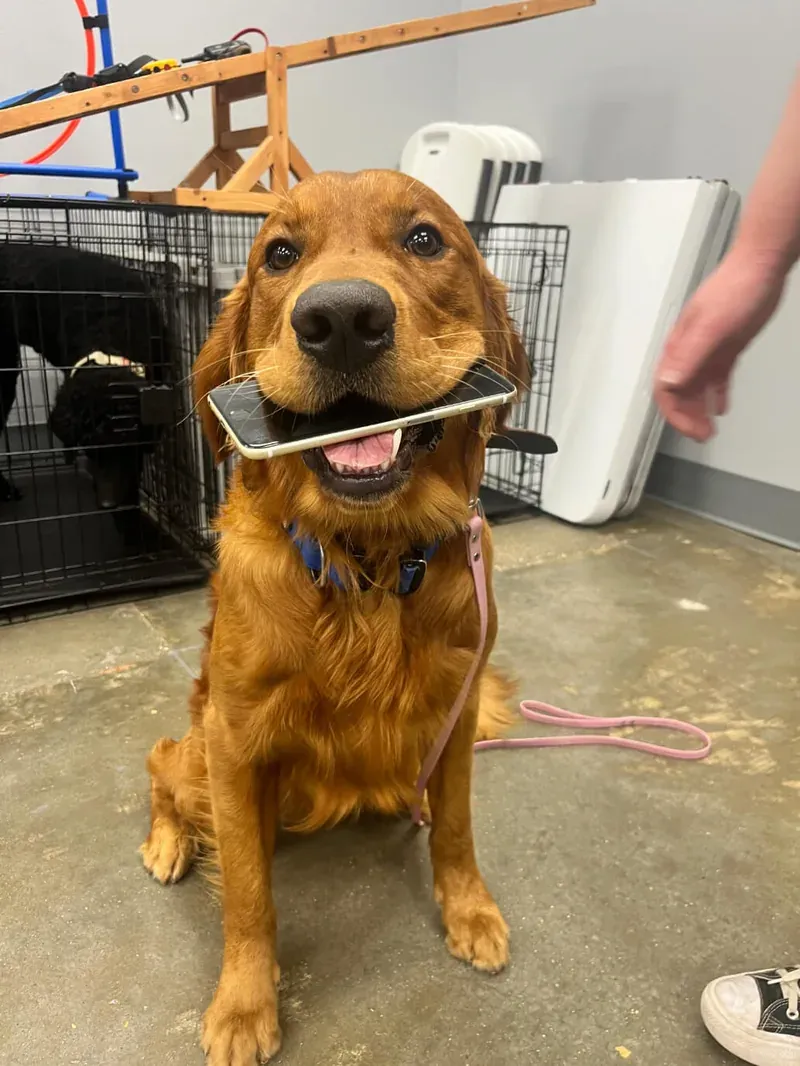
Is this your dog?
- You need a service dog — mobility assistance, medical alert, psychiatric support or autism support (for kids and adults alike)
- You want to owner-train with professional structure instead of going it alone
- You're ready for a two-plus-year commitment done right
- You want costs spread step by step — not a five-figure invoice up front
- You'd like an honest expert assessment before you invest in a prospect
Sound familiar? You’re in the right classroom.
What’s Included
- Free service prospect selection consultation
- Structured steps from foundation skills to task training
- Individual sessions, small groups and public access outings
- CGC, CGCA and CGCU testing along the way
- Step-by-step invoicing — pay as you progress
Tuition
Step-by-step invoicing from a free consultation to task training.
The Curriculum
What you’ll actually learn
Prospect selection that prevents heartbreak
Most owner-trained service dogs wash out because the wrong dog was chosen. Our free selection consultation — application, breeder guidance and temperament testing — stacks the odds in your favor before you spend a dollar on training.
Foundations built to testing standards
Two structured foundation phases combine individual sessions, small groups and public access outings, with Canine Good Citizen (CGC) and Advanced CGC (CGCA) testing to prove the work.
Real public access skills
Neutrality in stores, restaurants and crowds — rehearsed in practice runs, then confirmed with formal public access testing and the Urban CGC (CGCU).
Task training that changes daily life
The final step teaches the job itself. Our head trainer specializes in retrieval work for mobility assistance and medical alert tasks, and we also train psychiatric service dogs and autism support dogs — including for children — customized to your needs.
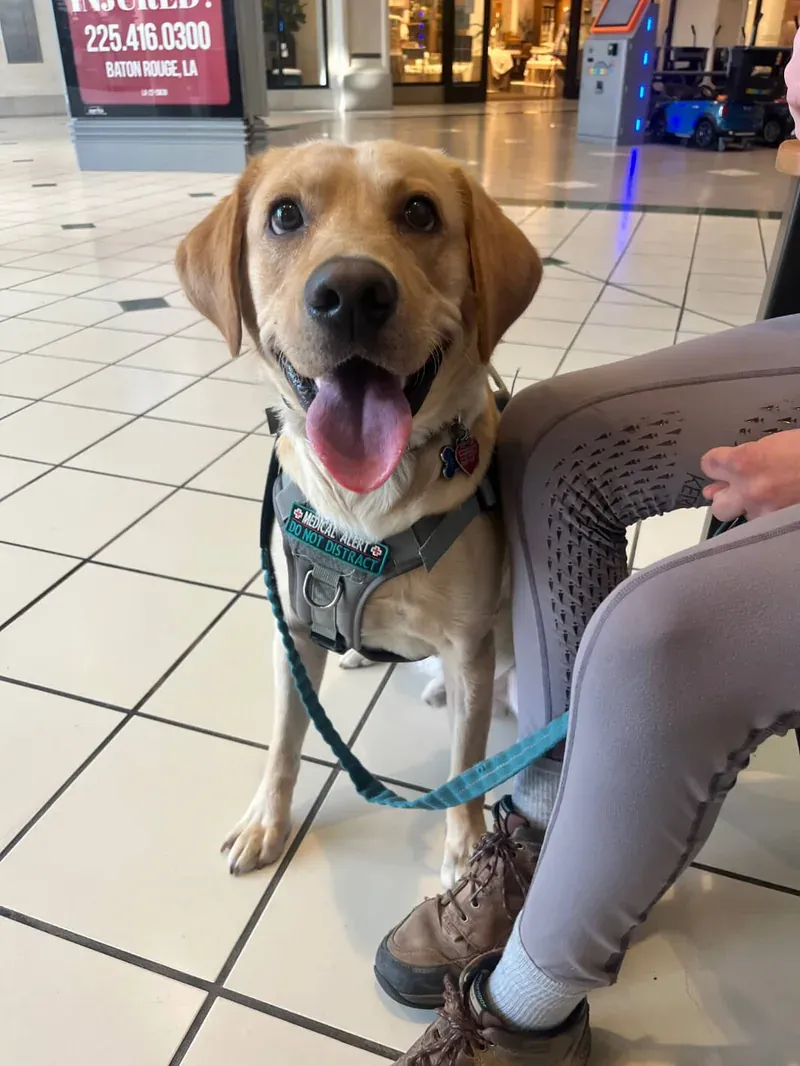
Step-by-Step Invoicing
The full curriculum
From a free selection consultation to full task training, every step has a clear scope and a clear price — invoiced as you progress, never all at once.
- StartFree
Service Prospect Selection Consultation
Application and consultation · Breeder selection guidance · Temperament testing
- Intro$1,200
Raising a Service Prospect
About the first 3 months · Orientation and program booklet · Training schedules · Individual and small group training · Graduation
- Step 1$2,100
Foundation 1
About 5–6 months of training · Individual, small group and public access training · Canine Good Citizen (CGC) test
- Step 2$2,100
Foundation 2
About 5–6 months of training · Individual, small group and public access training · Advanced Canine Good Citizen (CGCA) test
- Step 3$3,500
Public Access
About 4 months of training · Placement test · Practice and actual public access testing · Urban Canine Good Citizen (CGCU) test
- Step 4$4,500
Tasking
The final 5–6 months · Individual task training · Public tasking outings · Customized to your disability-related needs
The Lesson Plan
How Service Dog Program works
- 1
Start free
The Service Prospect Selection Consultation costs nothing — application, consultation, breeder selection guidance and temperament testing.
- 2
Raise the prospect
The Intro phase ($1,200) spans roughly the first three months — orientation, your program booklet, training schedules, individual and small-group work, and graduation.
- 3
Build the foundations
Foundation 1 and 2 ($2,100 each) span roughly five to six months apiece — individual, small-group and public access work, with CGC and CGCA testing to prove it.
- 4
Earn public access, then the job
Public Access ($3,500, about four months) proves your dog in the real world with formal testing. Tasking ($4,500, the final five to six months) trains the job itself.
Required Reading
What a service dog is — and isn't
Under the Americans with Disabilities Act, a service dog is a dog individually trained to perform specific tasks for a person with a disability — guiding, alerting, retrieving, bracing, interrupting episodes. That task-training requirement is the legal and practical line separating service dogs from emotional support animals (which provide comfort by presence and have no public access rights under the ADA) and therapy dogs (which visit facilities to comfort other people).
The distinction matters because the internet is full of registries, certificates and vests for sale that carry no legal weight whatsoever. There is no official U.S. service dog registry. What makes a service dog legitimate is the training itself: real tasks that mitigate a real disability, performed by a dog with the temperament and public behavior to work anywhere their handler goes.
That's the standard our program trains to — the actual work, testing milestones included, with nothing outsourced to a piece of paper.
Examples of tasks we train
Every task package is built around the handler. Here are a few examples of the kinds of work we train most often:
Retrieval work for mobility assistance
Picking up dropped keys, phones and medication; fetching named items; carrying objects; opening access to daily independence for handlers with limited mobility, balance or reach. Retrieval chains are complex behaviors built from dozens of small steps — exactly the kind of structured teaching we love.
Medical alert
Training a dog to recognize and respond to medical events — alerting the handler, fetching help or medication, providing a reliable response when seconds matter. Alert work is customized to the handler's specific condition and needs.
Psychiatric and developmental support
Psychiatric service dogs — interrupting anxiety spirals, grounding during panic, creating space in crowds — and autism support dogs for kids and adults alike. Task packages are designed around the handler's actual daily challenges, and for children, with an adult as the primary handler-in-training.
Customized task packages
The final Tasking step is built around your disability-related needs, discussed honestly in your free consultation. If a task is outside our expertise, we'll say so and help you find the right specialist — that's what honest programs do.
Why most owner-trained service dogs wash out
The uncomfortable industry reality: a large share of owner-trained service dog candidates never finish — and the most common cause isn't bad training. It's the wrong dog. Genetics, temperament and health set a ceiling no amount of training can raise. A dog with environmental sensitivity, dog-reactivity or chronic pain cannot do this job, no matter how much their person loves them.
This is why our program starts with a free Service Prospect Selection Consultation instead of a sales pitch. Temperament testing before you commit, breeder guidance if you're starting from scratch, and an honest assessment if you're hoping your current dog can work. Hearing "this dog isn't a service dog candidate" is painful — but hearing it two years and thousands of dollars later is worse.
The step-by-step structure continues that honesty throughout. Foundations must hold before public access begins; public access must be proven before task work starts. Each phase confirms the dog is still suitable before you invest in the next. Washouts still happen — but they happen early, cheaply and with a clear-eyed plan B instead of heartbreak.
The two-year journey, and what it costs
Legitimate service dog training takes eighteen months to two-plus years. Programs promising a finished service dog in ninety days are compressing away the maturation, socialization and proofing that keep handlers safe in the real world. Our timeline follows the dog: puppyhood foundations while the brain is most plastic, obedience and neutrality through adolescence, public access work as maturity arrives, and task training once the platform is solid.
Cost transparency matters as much as timeline honesty. Added up, our full program runs $13,400 from free consultation through complete task training — invoiced step by step across those two-plus years, never as a lump sum. For comparison, purchasing a fully trained service dog from a reputable program typically runs $20,000 to $50,000 with multi-year waitlists. Owner-training with professional structure costs less, builds an unmatched working bond, and keeps you in control of every stage — at the price of your own serious, sustained commitment.
Along the way, formal milestones prove the work: the AKC Canine Good Citizen (CGC) after Foundation 1, the Advanced CGC (CGCA) after Foundation 2, the Urban CGC (CGCU) and formal public access testing in the Public Access phase. Independent, recognized checkpoints — so progress is never a matter of opinion.
Office Hours
Service Dog Program questions
What tasks can you train?
Our specialty is retrieval work for mobility assistance and medical alert tasks — picking up dropped items, fetching medication, alerting to medical events. We also train psychiatric service dogs and autism support dogs, including for children. Task work in the final step is customized to your specific needs, which we'll discuss during your free consultation.
Can my current dog become a service dog?
Maybe — and it's better to find out before investing years of work. Temperament testing during the free selection consultation gives you an honest read on whether your dog is a strong candidate, and the step-by-step structure means suitability keeps being confirmed as training progresses.
Why does the program take two-plus years?
Because that's what the job requires. A service dog has to be rock-solid in every environment before task work even begins. Programs promising a finished service dog in a few months are skipping the parts that keep handlers safe.
Why step-by-step invoicing?
Two reasons: it spreads a serious investment over the years it actually takes, and it protects you. You pay for each phase as your dog reaches it — never for promises about a dog who isn't there yet.
What breeds make the best service dogs?
Labs, Golden Retrievers, Standard Poodles and their crosses dominate the field for good reason — biddable temperaments, stable nerves and the right size for mobility work. But breed is a starting point, not a guarantee: the individual dog's temperament, health and structure matter far more, which is exactly what our selection consultation evaluates.
Do you certify or register the service dog at the end?
We train and test — because that's what actually exists. There is no official U.S. service dog registry, and the ADA doesn't require certification; online registries selling certificates carry no legal weight. What your dog earns in our program is real: documented training, CGC, CGCA and CGCU titles, and passed public access testing — the evidence that matters.
Can I train a service dog for my child?
Yes — with the understanding that an adult is the primary handler-in-training. Service dogs for children involve extra considerations around handler responsibility and task design, which we'll talk through honestly in your free consultation.
What happens if my dog washes out partway through?
First: because of our selection process and stepwise structure, this is far less likely — and caught far earlier — than in go-it-alone owner training. If it does happen, you stop paying for phases you never reach, your dog keeps every skill they've learned (usually emerging as a spectacular pet), and we'll help you plan next steps, including evaluating a new prospect if you choose to continue.
More Classes