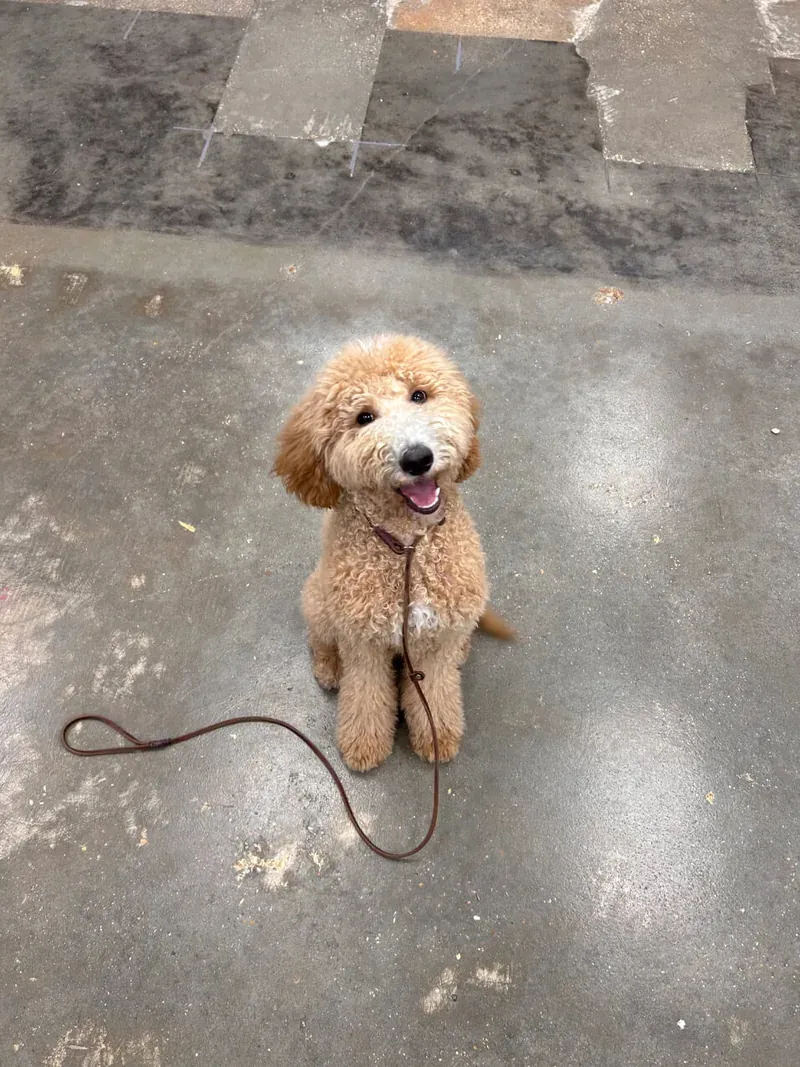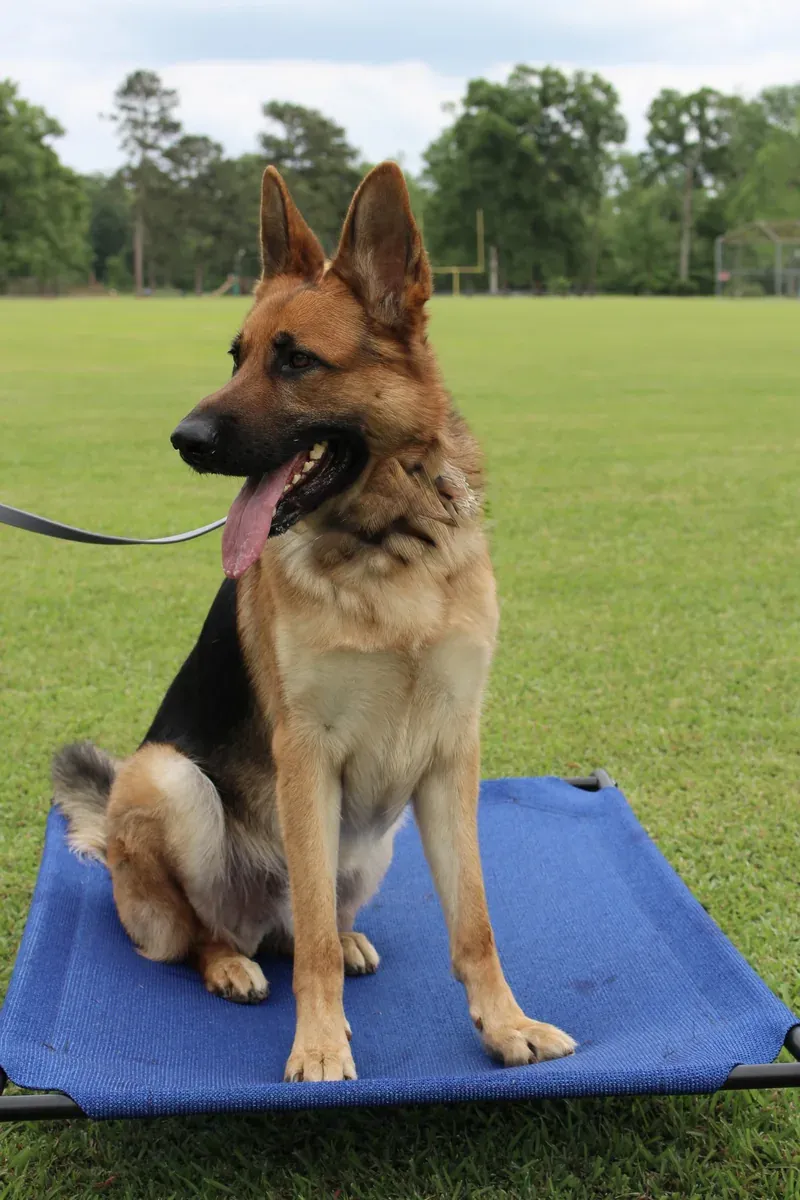
Think of the Canine Good Citizen test as your dog’s first real report card. It’s a ten-skill evaluation from the American Kennel Club (AKC) that certifies one simple thing: this dog has good manners in the real world, around real people and real dogs. For pet owners it’s a fantastic training goal; for service dog prospects it’s an essential milestone on the road to public access work.
The 10 skills on the test
Your dog is graded on ten everyday scenarios, all performed on leash:
- Accepting a friendly stranger — no shyness, no jumping while a stranger greets you.
- Sitting politely for petting — the dog tolerates (ideally enjoys) a stranger’s touch.
- Appearance and grooming — allows brushing and a check of ears and front feet.
- Walking on a loose leash — turns, stops and pace changes without dragging you.
- Walking through a crowd — passes close to several people without wrapping you around a lamppost.
- Sit, down and stay in place — the classroom classics, on cue.
- Coming when called — a recall from ten feet away.
- Reaction to another dog — two handlers and dogs meet; the dogs show casual interest at most.
- Reaction to distraction — a dropped chair, a rolling cart, a jogger; the dog may startle but recovers.
- Supervised separation — the dog stays calm with the evaluator while you disappear for three minutes.
No treats are allowed during the actual test — which is exactly why preparation matters more than cramming.

The advanced levels: CGCA and CGCU
Passed with flying colors? There are two honors classes. CGCA (Community Canine) is the advanced version, tested in real public settings with more distance, more distraction and more realistic scenarios. CGCU (Urban CGC) takes the test downtown: traffic noise, tight sidewalks, doorways, elevators and city chaos.
If a service dog is your goal, these aren’t optional extras — they’re how you prove a dog is genuinely ready for public access work. Our Service Dog Program builds CGC, CGCA and CGCU testing directly into the curriculum, in that order, as the dog progresses through its foundations.
Teacher’s tip: The hardest items for most dogs are #8 (the dog-to-dog greeting) and #10 (supervised separation) — one tests neutrality around dogs, the other calm without you. Both are trained skills, not personality traits. Start practicing them months before test day, in tiny doses.
How to prepare (without losing your mind)
- Train the pieces separately. Loose-leash walking on quiet streets first; crowds come later. Stays at home before stays in the park.
- Fade the treats early. Since the test is reward-free, practice runs where praise is the only paycheck.
- Rehearse the separation. Leave your dog with a friend for 30 seconds, then a minute, then three. Boring is the goal.
- Find an AKC-approved evaluator through the AKC website when your practice runs feel effortless.
Is the CGC worth it for a regular pet?
Honestly? Yes — and not really for the certificate. The CGC is a curriculum in disguise: a dog who can pass it is a dog you can take anywhere. Some insurers and landlords look kindly on it, therapy dog organizations often require it, and the training process itself deepens the bond that makes everything else easier.
Want a study partner? Our Pet Dog Prep program can aim your custom training plan squarely at a CGC pass — taught live and 1:1, with homework between sessions. (We’re teachers. There’s always homework.)