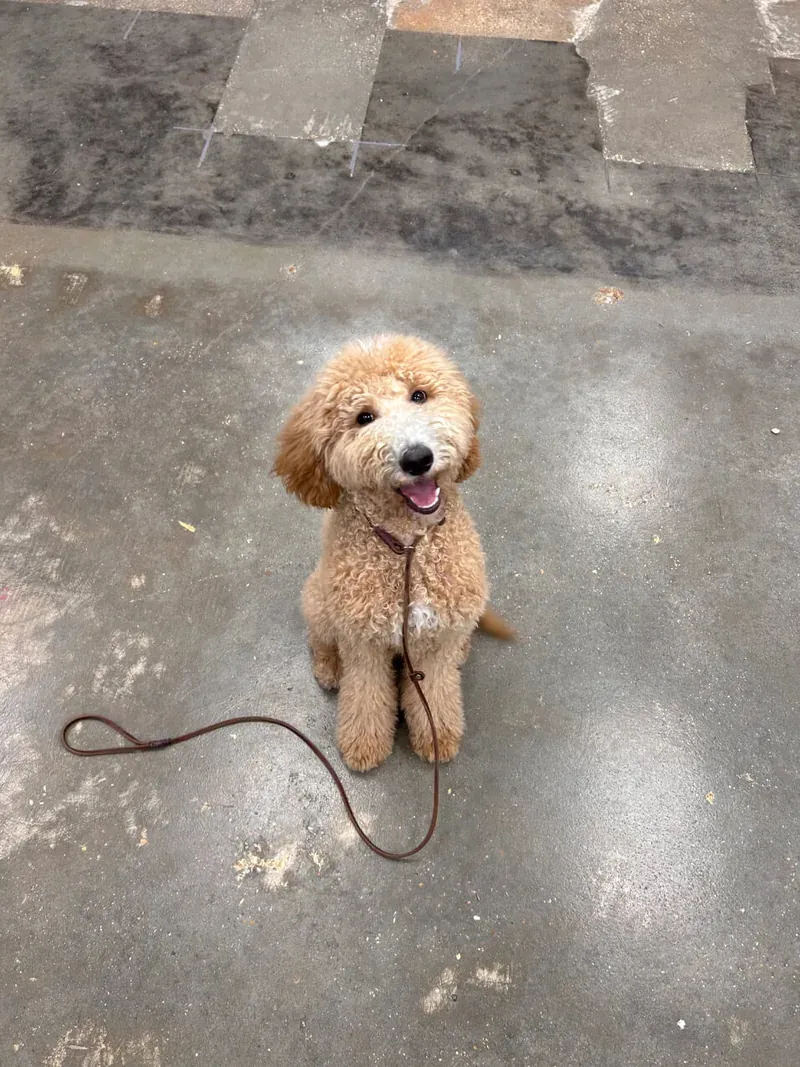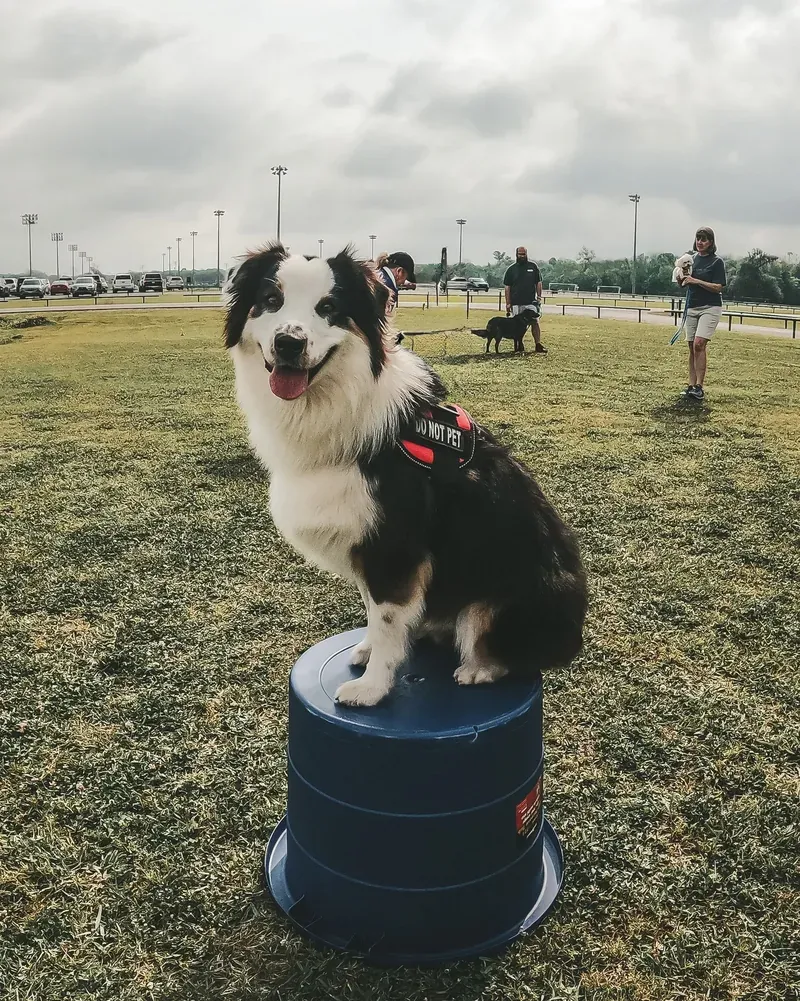
Your dog spots another dog half a block away. Ears up. Body stiff. And then — the explosion: barking, lunging, spinning at the end of the leash while you apologize to everyone within earshot. If this is your daily walk, here’s the first thing to know: your dog is not giving you a hard time. Your dog is having a hard time.
What reactivity is (and isn’t)
Reactivity is an oversized emotional response to a normal trigger — usually other dogs, strangers, bikes or cars. Underneath the noise, it’s almost always one of three feelings:
- Fear: “You’re scary — stay away!” The barking works, too: scary things usually do move away.
- Frustration: “I want to say hi and this leash won’t let me!” Common in friendly dogs who learned that pulling ends in greetings.
- Overarousal: too much excitement with nowhere to put it.
What it usually isn’t: “dominance,” spite, or a “bad dog.” And a reactive dog is not necessarily an aggressive dog — most reactive dogs are trying to make distance, not contact.
The one concept that changes everything: threshold
Every reactive dog has a distance at which they notice a trigger but can still think, eat treats and respond to their name. Closer than that line, the thinking brain goes offline and no amount of “sit! SIT!” gets through. That line is called the threshold.
The entire game of reactivity training is played on the calm side of that line: your dog practices noticing the trigger and staying okay, over and over, while the line gradually moves closer. Every rehearsal of the full meltdown, on the other hand, makes the behavior stronger — practice works both ways.
Teacher’s tip: Distance is your best friend. Crossing the street, turning up a driveway or ducking behind a parked car isn’t “giving up” — it’s managing the classroom so learning can actually happen.
Why punishing the barking backfires
Leash corrections, yelling or shock can sometimes suppress the noise — but they don’t change the feeling underneath it. Worse, they add a new lesson: “when other dogs appear, bad things happen to me.” That’s how a barky dog becomes a genuinely scared one, and how warning signals get replaced by silent escalation. Change the emotion and the behavior follows.
First steps that actually help
- Map your dog’s triggers and threshold. What sets them off, and from how far? Write it down like a good scientist.
- Stop the rehearsals. For now, walk at quieter times and places. Fewer explosions this week means faster progress next month.
- Pair triggers with good things. Dog appears at a safe distance → chicken rains from the sky → dog disappears → chicken stops. You’re rewriting the emotional math.
- Teach an escape hatch. A cheerful “let’s go!” U-turn, trained at home first, gives you both a plan for surprise encounters.
- Use comfortable equipment. A well-fitted harness gives you control without adding neck pressure to an already stressed dog.
When to call in a teacher
If walks feel unsafe, progress has stalled, or you simply want a teacher reading your dog alongside you, that’s what we do — and reactivity is a case where virtual training genuinely shines: your dog learns in the exact environment where the behavior happens, without a car ride to a lobby full of trigger dogs. Two of our Teacher’s Pets honor roll members — Gunner and Buddy — started exactly where you are now.